
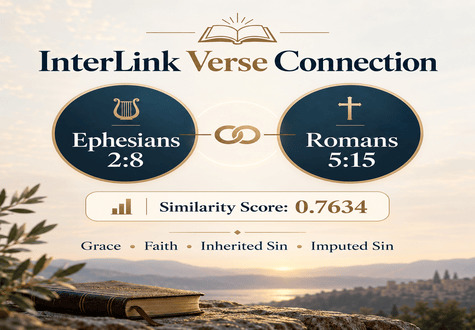
The verse connection of the week shows the closest semantic neighbor to our target verse. We briefly explain the metric from a scientific standpoint and provide a short theological background to show how they might be connected.
𝗔𝗻𝗰𝗵𝗼𝗿 𝗧𝗲𝘅𝘁: Ephesians 2:8, KJV 1769
“For by grace are ye saved through faith; and that not of yourselves: it is the gift of God:”
𝗧𝗼𝗽 𝗦𝗲𝗺𝗮𝗻𝘁𝗶𝗰 𝗡𝗲𝗶𝗴𝗵𝗯𝗼𝗿: Romans 5:15, KJV 1769
“But not as the offence, so also is the free gift. For if through the offence of one many be dead, much more the grace of God, and the gift by grace, which is by one man, Jesus Christ, hath abounded unto many.”
𝗜𝗻𝘁𝗲𝗿𝗟𝗶𝗻𝗸 𝗦𝗶𝗺𝗶𝗹𝗮𝗿𝗶𝘁𝘆 𝗦𝗰𝗼𝗿𝗲: 0.7634
𝗘𝘅𝗽𝗹𝗮𝗻𝗮𝘁𝗶𝗼𝗻 𝗼𝗳 𝗺𝗲𝘁𝗿𝗶𝗰:
Cosine similarity measures how close two passages are in embedding space. In plain English, the closer the score is to 1.0, the more strongly the model sees the passages as related in meaning. Current score thresholds are as follows:
- 𝟬.𝟳𝟱 𝘁𝗼 𝟭.𝟬𝟬: Semantic equivalents, or variations of the same passage
- 𝟬.𝟱𝟱 𝘁𝗼 𝟬.𝟳𝟰: Context is highly relevant but uses different language
- 𝟬.𝟰𝟬 𝘁𝗼 𝟬.𝟱𝟰: Shared broad concepts or domains overlap
- 𝗕𝗲𝗹𝗼𝘄 𝟬.𝟰𝟬: Low or no relation
𝗪𝗵𝘆 𝘁𝗵𝗲𝘀𝗲 𝗽𝗮𝘀𝘀𝗮𝗴𝗲𝘀 𝗮𝗿𝗲 𝘀𝗶𝗺𝗶𝗹𝗮𝗿:
Both passages emphasize that divine grace is a free gift from God that cannot be earned and is granted solely by His will to many.
𝗖𝗼𝗻𝘁𝗲𝘅𝘁𝘂𝗮𝗹 𝗡𝗼𝘁𝗲:
I’ll bring to light two additional verses for this analysis, Ephesians 2:9 and Romans 5:12. Ephesians 2:9 explains that God gives grace freely rather than as a reward, which means no person can claim credit for receiving it. Romans 5:12 details that sin entered into the world by one man’s decision, consequently passing death to humankind so that all are considered to have sinned. These, in tandem with the aforementioned verses,
paint a picture of one man’s sinful decision bringing death to all because now sin is inherited by all, and God gratuitously gives divine grace solely through faith by the work of Jesus Christ, which is inversely related to the offense mentioned in Romans 5:15. Furthermore, it is reiterated the gift of divine grace is not earned insomuch that the person(s) that receive it have nothing to boast about, to man or God, as they had nothing to do with receiving it.
𝗙𝘂𝗿𝘁𝗵𝗲𝗿 𝗥𝗲𝘀𝗲𝗮𝗿𝗰𝗵 𝗮𝗻𝗱 𝗥𝗲𝗳𝗹𝗲𝗰𝘁𝗶𝗼𝗻:
If a person cannot save themselves, but faith is required to receive divine grace from God, what or who is the object of that faith?
How does God decide when to bestow the free gift of divine grace, and how does Jesus Christ factor into this process?
What offense is spoken of in Romans 5:15, and why are many dead because of it? How does this offense connect to divine grace?
𝗧𝗮𝗸𝗲𝗮𝘄𝗮𝘆:
The semantic layer identified a strong, valid thematic link between the anchor text and its closest neighbor that proves to be one of many interconnections in fully understanding the themes of divine grace, inherited sin, imputed sin, and faith.
Disclaimer:
𝘐𝘯𝘵𝘦𝘳𝘓𝘪𝘯𝘬 𝘩𝘦𝘭𝘱𝘴 𝘴𝘶𝘳𝘧𝘢𝘤𝘦 𝘮𝘦𝘢𝘯𝘪𝘯𝘨𝘧𝘶𝘭 𝘵𝘦𝘹𝘵𝘶𝘢𝘭 𝘳𝘦𝘭𝘢𝘵𝘪𝘰𝘯𝘴𝘩𝘪𝘱𝘴 𝘵𝘩𝘢𝘵 𝘤𝘢𝘯 𝘵𝘩𝘦𝘯 𝘣𝘦 𝘦𝘹𝘢𝘮𝘪𝘯𝘦𝘥 𝘵𝘩𝘳𝘰𝘶𝘨𝘩 𝘩𝘪𝘴𝘵𝘰𝘳𝘪𝘤𝘢𝘭, 𝘵𝘩𝘦𝘰𝘭𝘰𝘨𝘪𝘤𝘢𝘭, 𝘢𝘯𝘥 𝘭𝘪𝘵𝘦𝘳𝘢𝘳𝘺 𝘤𝘰𝘯𝘵𝘦𝘹𝘵. 𝘐𝘵 𝘥𝘰𝘦𝘴 𝘯𝘰𝘵 𝘳𝘦𝘱𝘭𝘢𝘤𝘦 𝘪𝘯𝘵𝘦𝘳𝘱𝘳𝘦𝘵𝘢𝘵𝘪𝘰𝘯. 𝘛𝘩𝘪𝘴 𝘪𝘴 𝘢𝘯 𝘦𝘹𝘱𝘭𝘰𝘳𝘢𝘵𝘰𝘳𝘺 𝘳𝘦𝘴𝘶𝘭𝘵 𝘶𝘴𝘪𝘯𝘨 𝘵𝘩𝘦 𝘤𝘶𝘳𝘳𝘦𝘯𝘵 𝘐𝘯𝘵𝘦𝘳𝘓𝘪𝘯𝘬 𝘴𝘦𝘮𝘢𝘯𝘵𝘪𝘤 𝘴𝘦𝘢𝘳𝘤𝘩 𝘭𝘢𝘺𝘦𝘳.
Be well.
Leave a Reply