
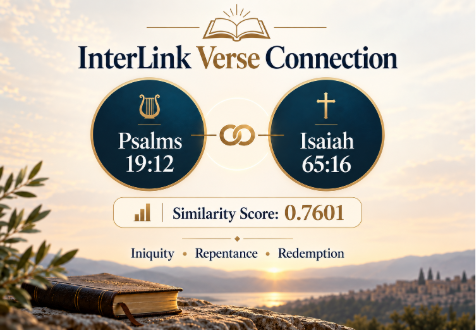
The verse connection of the week shows the closest semantic neighbor to our target verse. We briefly explain the metric from a scientific standpoint and provide a short theological background to show how they might be connected.
𝗔𝗻𝗰𝗵𝗼𝗿 𝗧𝗲𝘅𝘁: Psalms 19:12, KJV 1769
“Who can understand his errors? cleanse thou me from secret faults.”
𝗧𝗼𝗽 𝗦𝗲𝗺𝗮𝗻𝘁𝗶𝗰 𝗡𝗲𝗶𝗴𝗵𝗯𝗼𝗿: Isaiah 65:16, KJV 1769
“That he who blesseth himself in the earth shall bless himself in the God of truth; and he that sweareth in the earth shall swear by the God of truth; because the former troubles are forgotten, and because they are hid from mine eyes.”
𝗜𝗻𝘁𝗲𝗿𝗟𝗶𝗻𝗸 𝗦𝗶𝗺𝗶𝗹𝗮𝗿𝗶𝘁𝘆 𝗦𝗰𝗼𝗿𝗲: 0.7601
𝗘𝘅𝗽𝗹𝗮𝗻𝗮𝘁𝗶𝗼𝗻 𝗼𝗳 𝗺𝗲𝘁𝗿𝗶𝗰:
Cosine similarity measures how close two passages are in embedding space. In plain English, the closer the score is to 1.0, the more strongly the model sees the passages as related in meaning. Current score thresholds are as follows:
- 0.75 to 1.00: Semantic equivalents, or variations of the same passage
- 0.55 to 0.74: Context is highly relevant but uses different language
- 0.40 to 0.54: Shared broad concepts or domains overlap
- Below 0.40: Low or no relation
𝗪𝗵𝘆 𝘁𝗵𝗲𝘀𝗲 𝗽𝗮𝘀𝘀𝗮𝗴𝗲𝘀 𝗮𝗿𝗲 𝘀𝗶𝗺𝗶𝗹𝗮𝗿:
Both passages share a sentiment of attaining freedom from the bondage of anguish caused by a compunctious conscience.
𝗖𝗼𝗻𝘁𝗲𝘅𝘁𝘂𝗮𝗹 𝗡𝗼𝘁𝗲:
From a textual basis, the connection is hard to discern. Psalms 19:12 actively focuses on humility, self-examination, and a desire for purity during a moment of personal conviction, while Isaiah 65:16 focuses on triumph, comfort, and divine restoration from past spiritual bondage, spoken by God in a forward-looking manner.
The passages have different emotional tones, but the underlying theme is the same; the heaviness of the guilt that results from sin against God and the comfort that comes from being free of it. Psalms 38:4 testifies to this moral anguish, which causes a person’s heart to align with God due to the offense against Him (Psalms 51:4). This is not to be confused with worldly sorrow (2 Corinthians 7:10), as wordly sorrow is self-centered remorse; it is the fear of consequences or punishment rather than a hatred for the offense itself and the guilt of offending God (e.g., Judas’s vs. Peter’s sorrow). Furthermore, Isaiah 65:13-15 explains that the type of people referred to in Isaiah 65:16 are the servants of The Lord GOD.
To understand the classification of a servant of God, I’ve cross-examined Romans 6:18-22. Without expounding on the topic of dispensationalism, those who earnestly seek God’s will (for this analysis we go the route of Psalms 139:23-24) are the servants of righteousness and desire to be set apart from sin of which the author of Psalms 19:12 exhibits.
Here’s the connection; the relationship between Psalms 19:12 and Isaiah 65:16 illustrates the cycle of redemption because the confession of unconscious human frailty found in Psalms 19:12 finds its ultimate answer in the promise of divine, absolute erasure found in Isaiah 65:16, reserved for the servants of The Lord GOD. What is dangerously hidden from human self-awareness in the psalm is mercifully hidden from God’s wrath in the Isaiah passage.
𝗙𝘂𝗿𝘁𝗵𝗲𝗿 𝗥𝗲𝘀𝗲𝗮𝗿𝗰𝗵 𝗮𝗻𝗱 𝗥𝗲𝗳𝗹𝗲𝗰𝘁𝗶𝗼𝗻:
- Does this connection have anything to do with the connection between Psalms 32:2 and Romans 4:8? Ephesians 2:8 and Romans 5:15?
- How are secret faults cleansed?
- Why is God willing to hide the faults of His servants from His eyes?
𝗧𝗮𝗸𝗲𝗮𝘄𝗮𝘆:
Psalms 19:12 and Isaiah 65:16 both refer to troubles or guilt caused by one’s own actions, but Isaiah 65:16 also encompasses internal struggles caused by external circumstances. Internal strife is the target of this analysis, as that’s where the connection lies between the anchor verse and its semantic neighbor. While the connection is valid, diving deeper into the semantic themes of these verses will shine more light on the connection between understanding one’s own iniquity, seeking to be cleansed from it, and the actualization of being free from sin.
𝗗𝗶𝘀𝗰𝗹𝗮𝗶𝗺𝗲𝗿:
InterLink helps surface meaningful textual relationships that can then be examined through historical, theological, and literary context. It does not replace interpretation. This is an exploratory result using the current InterLink semantic search layer.
Be well.
Leave a Reply