
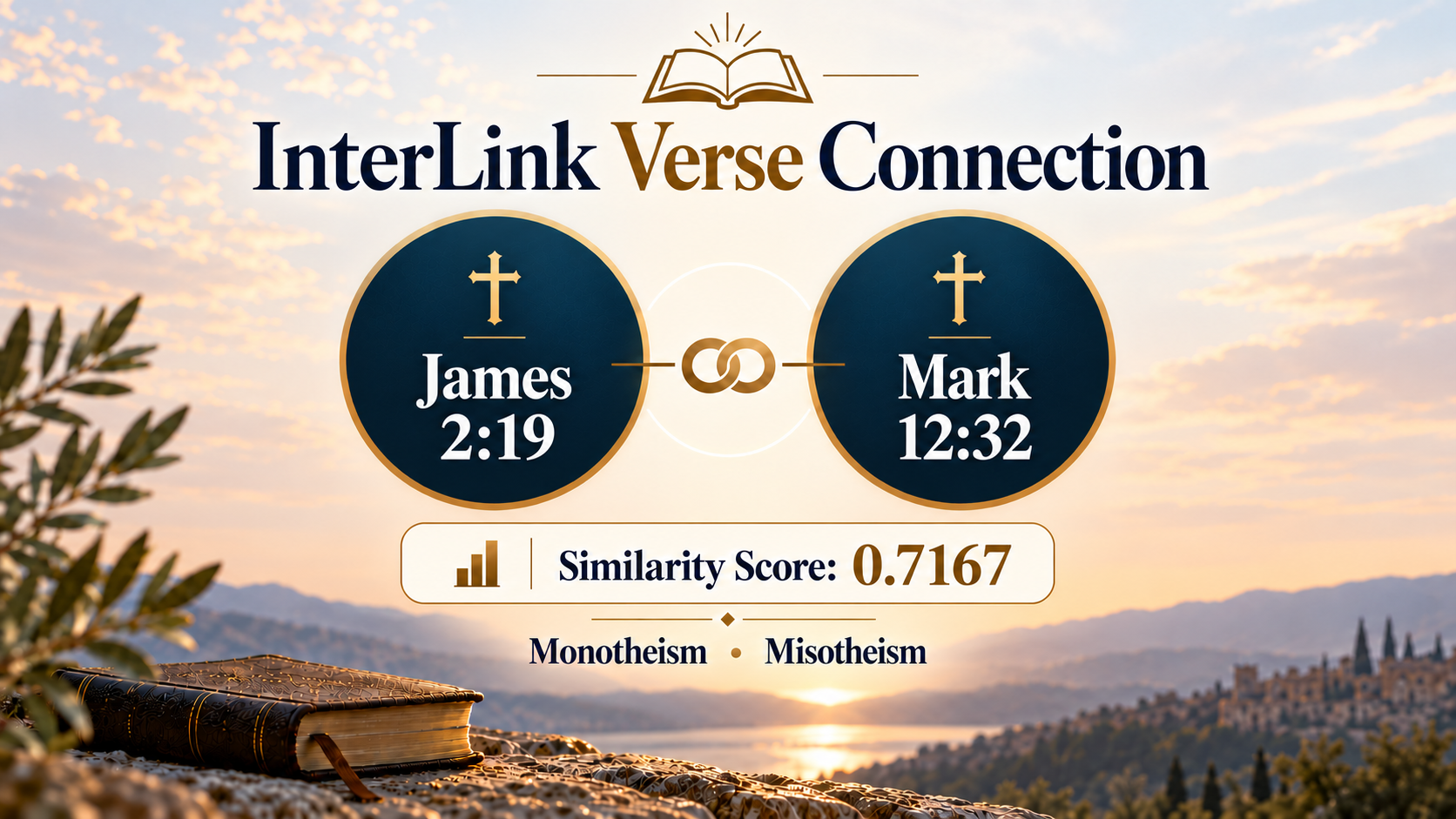
The verse connection of the week shows the closest semantic neighbor to our target verse. We briefly explain the metric from a scientific standpoint and provide a short theological background to show how they might be connected.
𝗔𝗻𝗰𝗵𝗼𝗿 𝗧𝗲𝘅𝘁: James 2:19, KJV 1769
“Thou believest that there is one God; thou doest well: the devils also believe, and tremble.”
𝗧𝗼𝗽 𝗦𝗲𝗺𝗮𝗻𝘁𝗶𝗰 𝗡𝗲𝗶𝗴𝗵𝗯𝗼𝗿: Mark 12:32, KJV 1769
“And the scribe said unto him, Well, Master, thou hast said the truth: for there is one God; and there is none other but he:”
𝗜𝗻𝘁𝗲𝗿𝗟𝗶𝗻𝗸 𝗦𝗶𝗺𝗶𝗹𝗮𝗿𝗶𝘁𝘆 𝗦𝗰𝗼𝗿𝗲: 0.7167
𝗘𝘅𝗽𝗹𝗮𝗻𝗮𝘁𝗶𝗼𝗻 𝗼𝗳 𝗺𝗲𝘁𝗿𝗶𝗰:
Cosine similarity measures how close two passages are in embedding space. In plain English, the closer the score is to 1.0, the more strongly the model sees the passages as related in meaning. Current score thresholds are as follows:
- 𝟬.𝟳𝟱 𝘁𝗼 𝟭.𝟬𝟬: Semantic equivalents, or variations of the same passage
- 𝟬.𝟱𝟱 𝘁𝗼 𝟬.𝟳𝟰: Context is highly relevant but uses different language
- 𝟬.𝟰𝟬 𝘁𝗼 𝟬.𝟱𝟰: Shared broad concepts or domains overlap
- 𝗕𝗲𝗹𝗼𝘄 𝟬.𝟰𝟬: Low or no relation
𝗪𝗵𝘆 𝘁𝗵𝗲𝘀𝗲 𝗽𝗮𝘀𝘀𝗮𝗴𝗲𝘀 𝗮𝗿𝗲 𝘀𝗶𝗺𝗶𝗹𝗮𝗿:
Both passages highlight the theme of monotheism, and present a latent theme of misotheism.
𝗖𝗼𝗻𝘁𝗲𝘅𝘁𝘂𝗮𝗹 𝗡𝗼𝘁𝗲:
The term “devils” in James 2:19 translates to “daimonion” in Greek: a spirit, a being inferior to God, superior to men; evil spirits or the messengers and ministers of the devil. The root word “daimon” means “a god” or inferior deity. Within the context of the verse, these “devils” possess perfect monotheism. They have no theological errors regarding God’s existence or unity (Matthew 8:29, Mark 1:24, Acts 19:15), yet their response to that knowledge is warfare (Jude 6:6, Ephesians 2:2, Ephesians 6:12) and trembling; they are the quintessential biblical archetype of misotheism. They know God, but stand in active rebellion against Him.
To cross-examine Mark 12:32, we establish the context of the Sadducees (Chief Priests), Pharisees (Elders/Rulers), Scribes (Teachers of the Law), and Herodians (Political faction). In John 3:2; Nicodemus mentions that “we know thou art a teacher come from God: for no man can do these miracles… except God be with him.”. This indicates the ruling religious authorities who witnessed Jesus’ doctrine and miracles recognized His divine backing. Furthermore, in the parable of the Wicked Tenants (Mark 12:1-12), Jesus states the husbandmen/workers recognized the heir (the Son), yet planned to kill him and steal his inheritance. Mark 12:12 notes the leaders knew He spoke this parable against them. They were not asking innocent questions; they were willfully fighting divine authority to protect their own power structure, attempting to sabotage and entrap Truth itself through a multi-pronged attack.
Just like the devils, these groups defended Monotheism (as the scribe repeats in Mark 12:32). However, because their hearts were hardened by pride, institutional power, and other potential factors, their monotheism transformed into misotheism when faced with God in the flesh (Mark 12:35-37). They did not doubt His supernatural authority; they wanted to entrap, sabotage, and eliminate Him to protect their own autonomy. As Matthew 12:30 concludes: “He that is not with me is against me…”.
𝗙𝘂𝗿𝘁𝗵𝗲𝗿 𝗥𝗲𝘀𝗲𝗮𝗿𝗰𝗵 𝗮𝗻𝗱 𝗥𝗲𝗳𝗹𝗲𝗰𝘁𝗶𝗼𝗻:
- How do the devils know God?
- What offended the Sadducees, Pharisees, and Scribes so much they wanted to eliminate Jesus?
- What is the difference between God and god?
𝗧𝗮𝗸𝗲𝗮𝘄𝗮𝘆:
The semantic layer uncovered a connection consisting of a strong main theme of monotheism, and a parallel latent theme of misotheism. The devils actively wage war while trembling in terror of a Judge they cannot escape, while the religious leaders used passive legalism, testing, and sabotage to protect their own power.
𝗗𝗶𝘀𝗰𝗹𝗮𝗶𝗺𝗲𝗿:
InterLink helps surface meaningful textual relationships that can then be examined through historical, theological, and literary context. It does not replace interpretation. This is an exploratory result using the current InterLink semantic search layer.
Be well.
Interested in the research behind InterLink?
These Verse Connection explorations build on the foundation established in my published study, Semantic Stability in the King James Bible: Comparing the 1611 and 1769 Editions. This research continues to evolve, with a follow-up publication in development.
I welcome your thoughts, questions, and interpretations. Whether your interests are in biblical studies, theology, linguistics, or computational research, I encourage you to explore the findings, join the discussion, and connect with me. Your perspectives may help inspire new questions and directions for future research.
Read the study: Article Link
Leave a Reply