
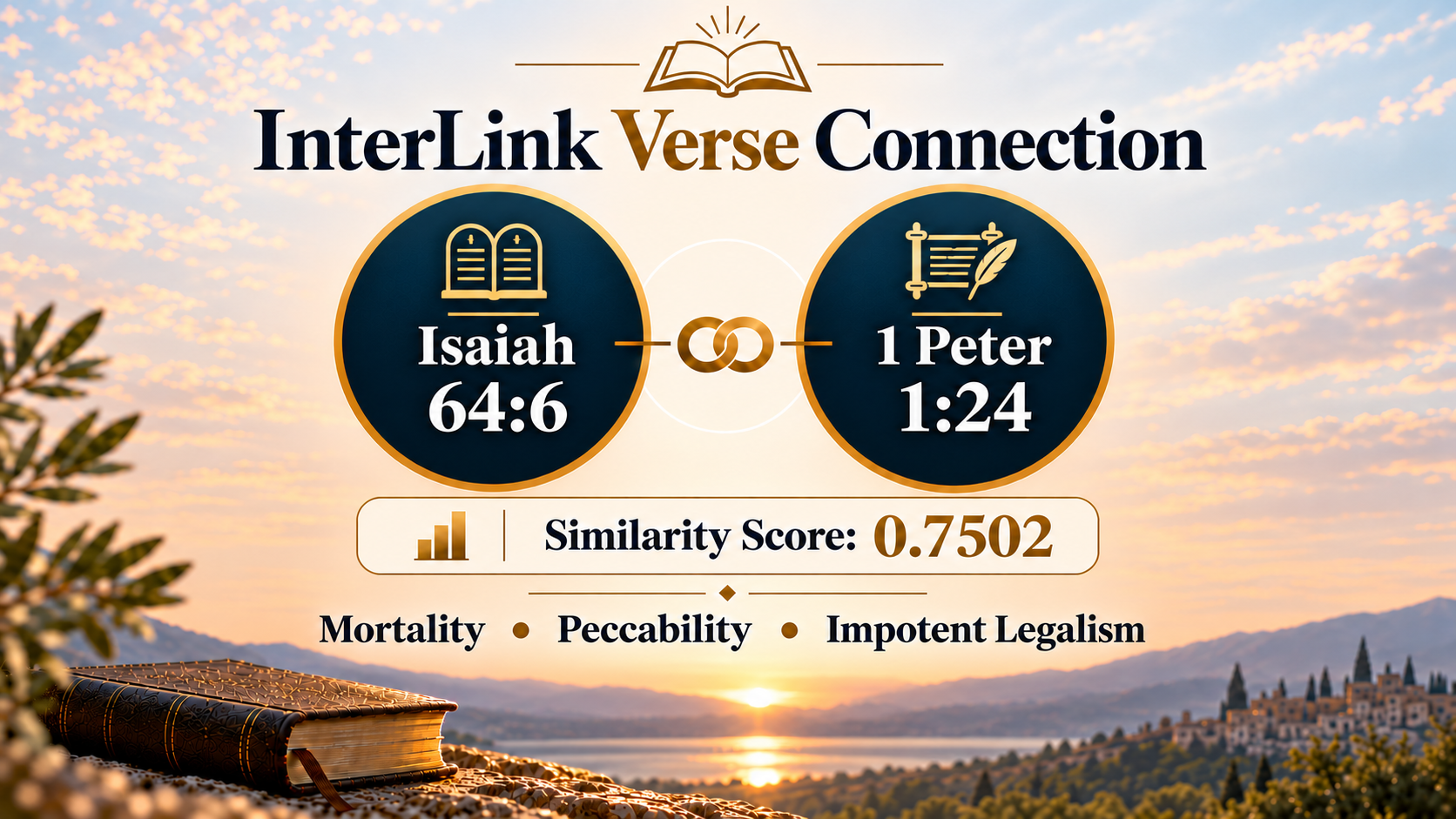
The InterLink Verse Connection explores meaningful relationships within and across biblical texts through computational analysis and theological interpretation. From weekly semantic verse comparisons to future cross-reference networks, the series examines how passages connect through shared language, themes, and historical context. Each exploration combines accessible scientific explanations with theological background, inviting readers to investigate these connections further.
𝗔𝗻𝗰𝗵𝗼𝗿 𝗧𝗲𝘅𝘁: Isaiah 64:6, KJV 1769
“But we are all as an unclean thing, and all our righteousnesses are as filthy rags; and we all do fade as a leaf; and our iniquities, like the wind, have taken us away.”
𝗧𝗼𝗽 𝗦𝗲𝗺𝗮𝗻𝘁𝗶𝗰 𝗡𝗲𝗶𝗴𝗵𝗯𝗼𝗿: 1 Peter 1:24, KJV 1769
“For all flesh is as grass, and all the glory of man as the flower of grass. The grass withereth, and the flower thereof falleth away:”
𝗜𝗻𝘁𝗲𝗿𝗟𝗶𝗻𝗸 𝗦𝗶𝗺𝗶𝗹𝗮𝗿𝗶𝘁𝘆 𝗦𝗰𝗼𝗿𝗲: 0.7502
𝗘𝘅𝗽𝗹𝗮𝗻𝗮𝘁𝗶𝗼𝗻 𝗼𝗳 𝗺𝗲𝘁𝗿𝗶𝗰:
Cosine similarity measures how close two passages are in embedding space. In plain English, the closer the score is to 1.0, the more strongly the model sees the passages as related in meaning. Current score thresholds are as follows:
- 𝟬.𝟳𝟱 𝘁𝗼 𝟭.𝟬𝟬: Semantic equivalents, or variations of the same passage
- 𝟬.𝟱𝟱 𝘁𝗼 𝟬.𝟳𝟰: Context is highly relevant but uses different language
- 𝟬.𝟰𝟬 𝘁𝗼 𝟬.𝟱𝟰: Shared broad concepts or domains overlap
- 𝗕𝗲𝗹𝗼𝘄 𝟬.𝟰𝟬: Low or no relation
𝗪𝗵𝘆 𝘁𝗵𝗲𝘀𝗲 𝗽𝗮𝘀𝘀𝗮𝗴𝗲𝘀 𝗮𝗿𝗲 𝘀𝗶𝗺𝗶𝗹𝗮𝗿:
Both passages bring to light the themes of mortality, peccability, and impotent legalism.
𝗖𝗼𝗻𝘁𝗲𝘅𝘁𝘂𝗮𝗹 𝗡𝗼𝘁𝗲:
Isaiah 64:6 serves as a penitential confession of human corruption and degeneracy. 1 Peter 1:24, quoting Isaiah 40:6-8, contrasts the frail nature of physical life with the permanence of God’s word. To uncover the latent themes driving this connection, I will map the overlapping clauses across the three themes, mortality, peccability, and impotent legalism. By tracing these themes through cross-references, we can see how the semantic layer bridges human frailty with spiritual insufficiency.
The opening clause of 1 Peter 1:24 establishes the fundamental frailty of human nature by equating all flesh to grass, corruptible, temporary, and easily cut down. This aligns with Isaiah’s statement that “we are all as an unclean thing”. In scripture, physical frailty and moral peccability are deeply intertwined because humanity is fallen and bound to a corruptible nature (Romans 7:18, Psalms 103:14-16), we are inherently weak, fallible, and incapable of sustaining spiritual purity on our own (Romans 3:23). Just as the grass withers under the scorching heat, human nature is constitutionally unable to withstand the standard of divine holiness (Isaiah 6:3-5, 1 Timothy 6:15-16, Isaiah 55:8-9).
Peter’s second clause adds the subject of human achievement to human nature, “all the glory of man as the flower of grass.”. The “glory of man” encompasses the peak of human capability, outward status, accumulated wealth, and moral or religious acts of righteousness. Yet Peter notes that this flower ultimately comes to nothing. This mirrors Isaiah’s assessment that “all our righteousnesses are as filthy rags”. Even when human works are performed with outward sincerity, or with true sincerity from the heart (Ecclesiastes 12:14, Proverbs 21:2, Isaiah 1:11), they remain entirely impotent as a mechanism for justification before God (Titus 3:5, Romans 3:20). In terms of salvific efficacy, man’s moral achievements are no more enduring than a fading flower and no more acceptable as payment for sin than a polluted garment. Legalistic self reliance fails because perishable efforts cannot purchase imperishable life (Galatians 3:10-25).
The final bridge between the two verses is the shared imagery of botanical decay to depict human mortality. Isaiah writes, “we all do fade as a leaf; and our iniquities, like the wind, have taken us away.” while Peter concludes, “The grass withereth, and the flower thereof falleth away:”. Both passages destroy the illusion of human permanence. Whether viewed through the lens of physical death (Job 14:1-2) or the judicial consequence of sin (Romans 6:23), humanity is depicted as transient. Without the regenerating power of the incorruptible Word of God (John 1:1,14, Titus 3:3-7), both the sinner and his finest works are swept away.
𝗙𝘂𝗿𝘁𝗵𝗲𝗿 𝗥𝗲𝘀𝗲𝗮𝗿𝗰𝗵 𝗮𝗻𝗱 𝗥𝗲𝗳𝗹𝗲𝗰𝘁𝗶𝗼𝗻:
- What kind of righteousness can truly please God unto salvation?
- If even our most sincere acts of righteousness fall short of justification, what is the biblical role of good works after a person is redeemed (Ephesians 2:8-10, Titus 3:8)?
- Is the clause “we are all as an unclean thing” somehow connected to the fallen nature inherited from Adam (Romans 5:12, Genesis 5:3)?
𝗧𝗮𝗸𝗲𝗮𝘄𝗮𝘆:
The semantic connection between Isaiah 64:6 and 1 Peter 1:24 is valid. The semantic layer detected an overarching theme of human transience and insufficiency, linking frail botanical imagery to the spiritual reality of human peccability, mortality, and the impotency of legalistic self justification.
𝗗𝗶𝘀𝗰𝗹𝗮𝗶𝗺𝗲𝗿:
𝘐𝘯𝘵𝘦𝘳𝘓𝘪𝘯𝘬 𝘩𝘦𝘭𝘱𝘴 𝘴𝘶𝘳𝘧𝘢𝘤𝘦 𝘮𝘦𝘢𝘯𝘪𝘯𝘨𝘧𝘶𝘭 𝘵𝘦𝘹𝘵𝘶𝘢𝘭 𝘳𝘦𝘭𝘢𝘵𝘪𝘰𝘯𝘴𝘩𝘪𝘱𝘴 𝘵𝘩𝘢𝘵 𝘤𝘢𝘯 𝘵𝘩𝘦𝘯 𝘣𝘦 𝘦𝘹𝘢𝘮𝘪𝘯𝘦𝘥 𝘵𝘩𝘳𝘰𝘶𝘨𝘩 𝘩𝘪𝘴𝘵𝘰𝘳𝘪𝘤𝘢𝘭, 𝘵𝘩𝘦𝘰𝘭𝘰𝘨𝘪𝘤𝘢𝘭, 𝘢𝘯𝘥 𝘭𝘪𝘵𝘦𝘳𝘢𝘳𝘺 𝘤𝘰𝘯𝘵𝘦𝘹𝘵. 𝘐𝘵 𝘥𝘰𝘦𝘴 𝘯𝘰𝘵 𝘳𝘦𝘱𝘭𝘢𝘤𝘦 𝘪𝘯𝘵𝘦𝘳𝘱𝘳𝘦𝘵𝘢𝘵𝘪𝘰𝘯. 𝘛𝘩𝘪𝘴 𝘪𝘴 𝘢𝘯 𝘦𝘹𝘱𝘭𝘰𝘳𝘢𝘵𝘰𝘳𝘺 𝘳𝘦𝘴𝘶𝘭𝘵 𝘶𝘴𝘪𝘯𝘨 𝘵𝘩𝘦 𝘤𝘶𝘳𝘳𝘦𝘯𝘵 𝘐𝘯𝘵𝘦𝘳𝘓𝘪𝘯𝘬 𝘴𝘦𝘮𝘢𝘯𝘵𝘪𝘤 𝘴𝘦𝘢𝘳𝘤𝘩 𝘭𝘢𝘺𝘦𝘳.
Be well.
𝗜𝗻𝘁𝗲𝗿𝗲𝘀𝘁𝗲𝗱 𝗶𝗻 𝘁𝗵𝗲 𝗿𝗲𝘀𝗲𝗮𝗿𝗰𝗵 𝗯𝗲𝗵𝗶𝗻𝗱 𝗜𝗻𝘁𝗲𝗿𝗟𝗶𝗻𝗸?
These Verse Connection explorations build on the foundation established in my published study, Semantic Stability in the King James Bible: Comparing the 1611 and 1769 Editions. This research continues to evolve, with a follow-up publication in development.
I welcome your thoughts, questions, and interpretations. Whether your interests are in biblical studies, theology, linguistics, or computational research, I encourage you to explore the findings, join the discussion, and connect with me. Your perspectives may help inspire new questions and directions for future research.
𝗥𝗲𝗮𝗱 𝘁𝗵𝗲 𝘀𝘁𝘂𝗱𝘆: Article Link
Leave a Reply